

“Cultural climate change” is the inscription on the hat worn by the Mayor of Oulu, Ari Alatossava, at the inauguration of the year’s European Capital of Culture. And it is the main theme of Oulu 2026, which opened with a snowy ceremony attended by the President of the Republic of Finland, Alexander Stubb, who emphasized that “the theme invites us to think about how we can learn new things through cultural experiences and create a sustainable future.”
Cultural climate change means the desire to connect people – to incorporate fun and joyful experiences into everyday life but also to broaden our ways of thinking, understanding and listening to each other. Cultural climate change fuels creativity and new development. The sparks that create ideas that change the future.
“In 2026, Europe will get excited about its farthest reaches when Oulu is named European Capital of Culture. Oulu is and will always be a technology city. In the future, we also want to be a bold cultural city, as we believe that culture plays a significant role in creating hope and success. Claim that Oulu 2026 CEO Piia Rantala Korhonen explained as a “Cultural climate change machine” well illustrated by the photo: three challenges (peripheral region, unbalanced community, hard tech city) corresponding to three themes (brave hinterland, cool contrast, wild city) which, through key priorities for each of the themes (rebuilt cultural system, more creative jobs and places, improved wellbeing, reconnecting art and tech, stronger geopolitical impact, action to stop climate change and improng life changes for young people) must lead Oulu and the region to be creative, vibrant and balanced.
Some numbers perfectly explain the city of Oulu:
The city was founded in 1605 by King Charles IX of Sweden and at that time had 1,600 inhabitants. Among the key milestones in its growth were the founding of the University in 1958, the arrival of Nokia in 1970, and in 1990, the city, with a population of 100,000, became the world’s leading mobile technology hub. Now, with over 200,000 inhabitants, it is the European Capital of Culture for 2026 and a hub of technology, city of innovation, and culture, with a budget of 50 million euros, 3,500 events, involving 39 other municipalities and expected to attract 2.5 million visitors.
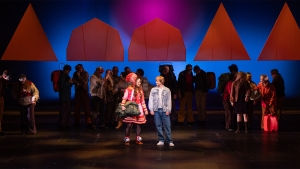
Oulu 2026 has dedicated a significant portion of its program to Sami culture, starting with the spectacular and exciting “Ovlla” opera, which premiered on the first day after the official opening of the year as European Capital of Culture.
The Sami are a people of undivided origin with their own language and culture living in a large, wide area called the “Land of the Sami.” They are a minority in the territories of four countries: Finland, Norway, Sweden and Russia. There are 10.000 Finnish Sami, more than half of them live outside the Sami area. They have a Sami Parliament, Samediggi, which attends to the cultural self-government.
In Finland there are three Sami languages, but only after mid-1970s children can have lessons in Sami. The culture is transferred in the form of oral heritage from one generation to another within the family or the community. The passing down of the language, traditions, stories, beliefs, values and skills usually begins in early childhood. The Sami handicraft tradition, “duodji”, transfers knowledge about tradition and culture from one generation to another.
Now, the opera “Ovlla”.
Ovlla, a Sami family member, has been left alone since he was little. As he grows up, he spends time with Finnish friends and at a festival meets a Sami woman, Anna, and falls in love. He works in a mine in Kiruna and tries to build his life as a Finnish, hiding his Sami roots, which resurface in his dreams. Anna is strongly attached to her Sami culture, and when, after they marry and have a daughter, she insists she speak Sami, while Ovlla fears discrimination in her future. Ovlla returns to his childhood memories: a dormitory in a Finnish school, where he was forced to forget the Sami language and adopt the Finnish culture. Anna moves away from Ovlla with the daughter, and he begins a period of anguished memories of his time in the Finnish school, until he realizes that his decisions will affect his daughter’s future. In the end, the meeting with his mother makes him face his past and allows him to accept his roots.
“This is the Sami experience crammed into one person -say the writers of the opera Juho SDire and Siri Broch-Johansen- thousand of personal histories jammed into one.” “Ovlla’s choice mirrors al the painful choices that people from an oppressed ethnical group might have to make in order to survive with some dignity intact”.
In the next days we will talk about some of the beautiful Oulu 2026 exhibitions.